

In 1836, Rose first prepared sulfamic acid by reacting lead iminosulfonate with hydrogen sulfide.
In 1878, Berglund obtained purer sulfamic acid.
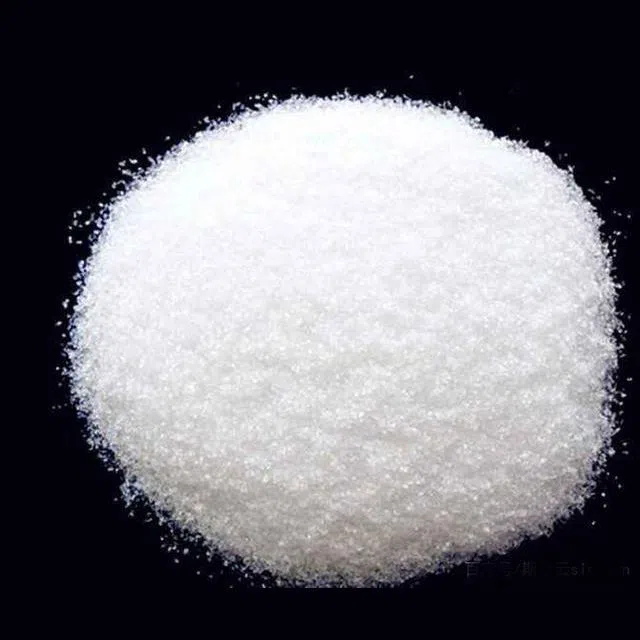
Sulfamic acid Cas No: 5329-14-6 is an inorganic solid acid formed by replacing the hydroxyl group of sulfuric acid with an amino group. The chemical formula is NH2SO3H, and the molecular weight is 97.09. For water and liquid ammonia, at room temperature, as long as it is kept dry and not in contact with water, solid sulfamic acid does not absorb moisture and is relatively stable.
The aqueous solution of sulfamic acid has the same strong acidity as hydrochloric acid and sulfuric acid, so it is also called solid sulfuric acid. It has the characteristics of non-volatile, odorless and low toxicity to human body. Dust or solution is irritating to eyes and skin and can cause burns, the maximum allowable concentration is 10 mg/m 3 . Sulfamic acid can be used to synthesize herbicides, fire retardants, sweeteners, preservatives, metal cleaning agents, etc. It is a common chemical raw material.
In the late 1930s, people began to pay attention to the experimental research of industrialization. Due to the increasing application of sulfamic acid, its industrial production technology was further developed in the 1950s. The United States first realized industrial production in the late 1960s and early 1970s, with a scale of kilotons. China began experimental research in the 1970s, mainly using urea and oleum as raw materials to produce sulfamic acid.
Application areas of sulfamic acid
1. Cleaning agent
Sulfamic acid cleaning agent has a wide range of applications and can be used to clean boilers, condensers, heat exchangers, jackets and chemical pipelines. It is used in breweries to remove glass-lined storage tanks, pots, open beer coolers, and scale layers on beer barrels; to clean evaporators in enamel factories and equipment in paper mills; in air conditioning, it can remove cooling systems and evaporative condensers. rust and scale; it can be used by sea ships to remove algae and scale in seawater evaporators (distillation equipment), heat exchangers and brine heaters; it can clean copper pots, radiators, tableware washing mechanisms, silverware, toilets, ceramic tiles,
Scale of food and milk processing equipment; removes protein deposits on digesters and deposits on sterilizers used in fresh meat, vegetable and cheese processing plants. The U.S. Department of Agriculture allows sulfamic acid to be used as an acid cleaning agent in fresh meat, poultry, rabbit, and egg processing enterprises.
2. Textile industry
Sulfamic acid can be used as a scavenger for excess nitrite in the diazotization reaction in the dye industry, as a fixer for textile dyeing, to form a fireproof layer on textiles, and as a yarn cleaner and other auxiliaries in the textile industry.
3. Paper industry
Sulfamic acid can be used as a bleaching aid, which can reduce or eliminate the catalytic effect of heavy metal ions in the bleaching liquid, to ensure the quality of the bleaching liquid, reduce the oxidative degradation of metal ions on the fiber, and prevent the peeling reaction of the fiber. , Improve pulp strength and whiteness.
4. Petroleum industry
Sulfamic acid can be used to unblock the oil layer and improve the permeability of the oil layer. The sulfamic acid solution is injected into the carbonate rock oil-producing layer, because the sulfamic acid is easy to react with the oil layer rock, which can avoid the deposition of salt generated by the reaction.
The treatment cost is slightly higher than that of hydrochloric acid, but the oil production is doubled. The United States uses potassium glycolate 48.5%, sulfamic acid 3.4%. The 0.1-3% aqueous solution of wetting agent cleans the gypsum scale layer in the oil well casing, and the treatment time is about 30 hours.
5. Agriculture
Sulfamic acid and ammonium sulfamate were originally developed as herbicides. They are said to have a contact poisoning effect when applied directly to plants,and a male-killing effect when applied to soil.
In 1978 in Guangdong Province, my country, the effect of sulfamic acid on the male-killing effect of rice was better than that of other salts. When sprayed at a concentration of 0.05% to 0.5%, the male-killing rate reached 95% to 100%. The effect is not stable enough, and it is harmful to medicine. The herbicidal concentration of sulfamic acid is usually 75 g/L active ingredient.
6. Electroplating solution
Sulfamic acid is generally used in gold plating or alloy plating. The electroplating solution for gold, silver and gold-silver alloy plating contains 60-170 g of sulfamic acid per liter of water. A typical plating solution for silver-plated women's clothing needles contains 125 g of sulfamic acid per liter of water, resulting in very bright silver plating. In the new aqueous gold plating solution, alkali metal sulfamate, ammonium sulfamate or sulfamic acid can be used as conductive and buffering compounds.
When recovering from nickel plating waste liquid, it is adsorbed with cation exchange resin and then cleaned with sulfamic acid, so that the adsorbed desorbed is desorbed and the resin is regenerated. For example, to treat 400 ppm Ni electroplating waste solution, use 50 ml of 150 g/L sulfamic acid to recover (NH2SO3) 2112 g/L and NiSO4 148 g/L. When nickel-plated parts are repaired, nickel-on-nickel plating is required, and 100 g/L sulfamic acid can be used for anodizing. The nickel-plated surface before nickel-plating should be cleaned with 0.003-0.1 mol of sulfamic acid solution.
The content of sulfamic acid in the copper plating solution is 3-20 L. The function of sulfamic acid is to make the plating layer fine and ductile, and its viscosity is high.
When NH2SO3H/Ir≥7 when plated with iridium, the obtained iridium coating has no cracks, the thickness of iridium layer is 15 microns, and the adhesive force is large. The product shows good activity in automatic anti-pollution equipment.
When rhodium-rhenium alloy is plated on silverware and electrical components, the sulfamic acid in the electrophoresis solution is 100 g/L. When the thickness of the coating is ≤5 microns, it has high hardness and strong corrosion resistance, and The plating layer is very bright and beautiful.
The smooth and beautiful rhodium-rhenium electric transition layer on brass has high hardness and corrosion resistance. The electroplating solution contains sulfamic acid 100 g/L, concentrated sulfuric acid 50 g/L, rhodium (such as sulfate) 2 g/L, rhenium [ For example, K3N(RuCl4H2O2)2]0.05 g/L, at 65℃ and 1~2A/dm2, the deposition rate is 3~4 mg/Amin.
Italy has used lead sulfamate baths instead of fluosilicic acid baths, which reduces pollution. There are many uses in the anti-aluminum industry. The product has good gloss and excellent processing performance.
Chemical synthesis analysis
In organic synthesis, sulfamic acid is a solid acid that is cheap, easy to obtain and has good stability. It has a good catalytic effect on the esterification reaction with acid, and does not corrode equipment. At the same time, it is also the raw material for the manufacture of synthetic sweeteners, herbicides, flame inhibitors, preservatives, etc. Products with a purity of more than 99.9% can also be used as standard solutions of acids during alkali titration.
Security and storage
Sulfamic acid has low toxicity. Slightly irritating to skin and eyes. Production equipment should be airtight, and operators should wear protective gear.
When eyes are irritated, rinse with water, and in severe cases, seek medical attention. In case of skin contact, rinse with water and wash thoroughly with soap. When entering, rinse your mouth immediately and send it to the hospital for treatment. Packed in wooden boxes lined with polyethylene plastic bags, net weight 25 kg per box. Store in a cool, ventilated and dry place.
The package should be sealed, pay attention to moisture-proof. Protect from rain and sunlight during transportation. Wear gas masks and gloves when disposing of escaping materials, sweep up with sand or wash with water. In case of fire, water, sand and fire extinguisher can be used to put out the fire.


