

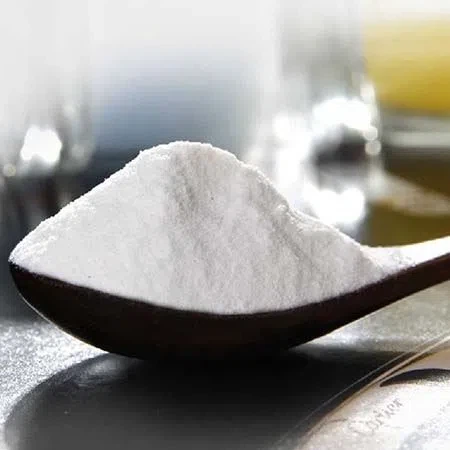
Konjac gum is often referred to as konjac flour, which is extracted from the tubers of konjac and has rich ingredients, among which glucomannan is more prominent.
This substance is a kind of high molecular polysaccharide, which has synergy and mutual solubility with most edible gums.
With the increase of people's demand for natural food, konjac gum has a series of functional properties, which will show greater of use space.
Konjac Gum Functional Properties
Konjac gum is a kind of high molecular polysaccharide. After inhaling water, it can expand about 100 times and has the characteristics of non-Newtonian fluid. For 1% konjac sol, it has the highest viscosity.
Compared with various additives, salt has little effect on it. If it is used in food, it can improve the viscosity and taste of food. , and whether it is in suspension or emulsified state, it can play a stable role.
Application of Konjac Gum in Meat Products
1. Application in biomimetic meat food
Traditional meat products are often a high-fat food. Since konjac gum has a series of properties, such as water holding capacity and swelling, these properties can be used to prepare biomimetic foods.
Aiming at the substance of konjac gum, various bionic foods, such as plain belly slices and plain sea cucumbers, are produced through shaping equipment, which are loved by many people at home and abroad. Some scholars regard konjac and soybean protein as the main raw materials, and add appropriate auxiliary materials and additives to produce konjac bionic chicken.
The best formula is obtained: the ratio of konjac and soybean protein is 3:2, adding 2% sodium carbonate, one-tenth chicken extract, and adding a certain amount of glutinous rice flour, pigments and spices, etc., can be prepared. Nutritious and delicious Konjac Bionic Chicken.
2. Application in reconstituted meat products
Since konjac glue has adhesiveness, it can increase the adhesive force of the product. In order to improve the utilization rate of meat scraps, some scholars have studied the application of konjac adhesive based on the bonding of scraps.
The results show that the ideal bonding effect can be obtained when the dosage is 2%. Some scholars have studied the poultry meat reconstituted ham.
After adding an appropriate amount of KGM and KSAP, the indicators of the reconstituted ham can be effectively optimized, the water analysis can be reduced, and a ham with a network structure can be produced; whether it is elasticity or compactness, it has been significantly improved.
The increase of the hardness reduces the hardness value and greatly optimizes the elasticity.
3. Application in the preservation of meat products
For meat products, because they contain sufficient nutrients and contain more water, whether it is processing or storage, it is very likely to be affected by two aspects.
On the one hand, it is contaminated by microorganisms, and on the other hand, it is environmental factors, which lead to the deterioration of meat. Based on this, the preservative and fresh-keeping of meat products has become the core research content.
Konjac gum is a kind of natural colloid. After interacting with water, it will produce a certain gel-like solution. It has a series of outstanding advantages, such as good reliability, ideal water absorption capacity, and relatively high viscosity.
Due to these advantages, konjac gum has become a popular preservation material, which is not only safe but also meets the requirements of environmental protection. It is a new way for the preservation of meat products.
The preservation mechanism of konjac gum is to use its gel film-forming properties to produce a certain film to prevent the related meat products from contacting with the outside air, avoid being affected by some microorganisms, and achieve the goal of preservation.
Some scholars have used konjac powder as a coating material. After disinfecting the pork, the corresponding coating treatment was carried out, and at the same time, it was compared with the chitosan coating. The pH and enzyme activity of the cooled meat were evaluated accordingly.
According to the research, compared with other treatments, the use of konjac powder can obtain a more considerable fresh-keeping effect, and the shelf life of the first-level freshness can reach about a week.


