

Introduction
Food-grade fumaric acid is a strategic, multi-functional food additive whose value extends far beyond the simplistic category of an "acidulant." This report aims to provide a deeper mechanistic analysis, refine its precise role across various application scenarios, and expand the dimensions of comparison to fully reveal its core competitiveness and indispensability in the modern food industry.
Deep Mechanistic Analysis: The Science Beyond Sourness
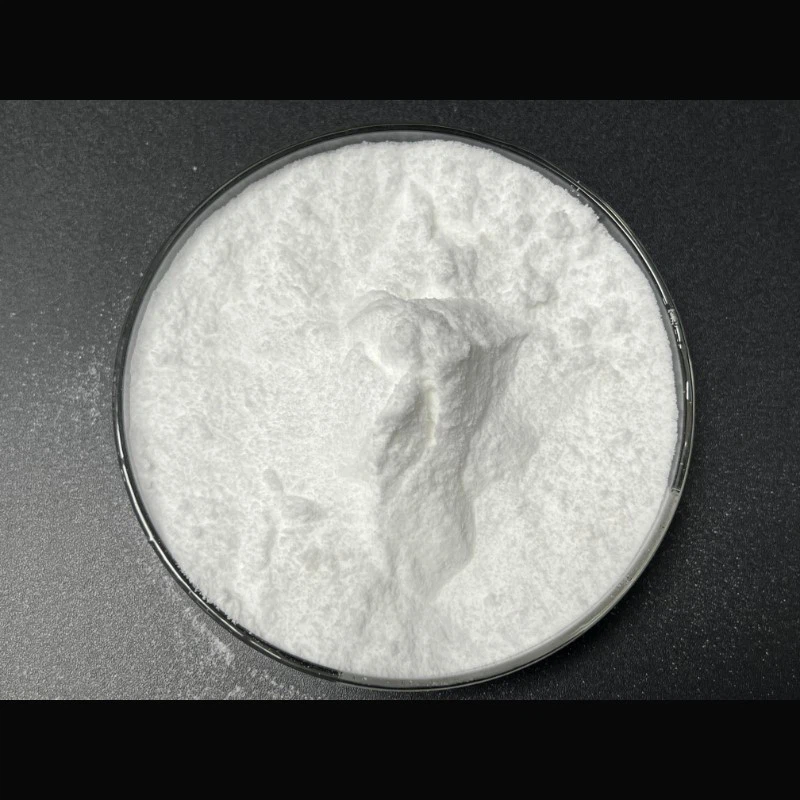
The Structural Logic of Chemical and Sensory Properties
Structural Root of High Acidity: As a dicarboxylic acid, fumaric acid's strength is linked to its symmetric trans-configuration. This structure gives it a lower first dissociation constant (pKa1≈3.0) compared to citric acid (pKa1≈3.1), meaning it provides more hydrogen ions at equal concentration, explaining its ~1.8x relative sourness intensity. Its "sharp and lingering" sour profile stems from specific molecular interactions with taste receptors.
The Application Dialectic of Low Solubility: Low solubility at room temperature (0.6g/100ml water) is often seen as a drawback. However, this property is the foundation of its slow-release effect. In processing, this can be overcome by pre-dissolving as its sodium salt (sodium fumarate, highly soluble) or using micronization/dispersion technologies. In final products (e.g., dry mixes), low solubility translates into extremely low hygroscopicity, the physical basis of its core advantage.
Multifaceted Mechanisms of Preservation:
- Penetration Effect of Undissociated Molecules: In acidic environments (pH <3.5), fumaric acid exists predominantly as undissociated molecules. These lipophilic molecules penetrate microbial cell membranes more effectively. Once inside the near-neutral cytoplasm, they dissociate, disrupting intracellular pH homeostasis and interfering with metabolic enzymes, ultimately causing microbial death or growth inhibition. This "proton force" mechanism is central to its high antimicrobial efficacy.
- Superior Synergy with Chemical Preservatives: Fumaric acid not only creates an unfavorable low-pH environment but also potentiates the effect of preservatives like benzoates and sorbates. Research suggests synergy may arise from dual perturbation of microbial cell membranes and enhanced activity of the preservative molecules.
Functional Chemistry in Food Systems:
- Starch Anti-Staling: Fumaric acid can bind to amylose molecules, interfering with starch retrogradation, thereby effectively extending the soft shelf-life of bread and rice products.
- Protein Modification: In meat products, its acidic environment aids in the solubilization of myofibrillar proteins, enhancing water-holding capacity, emulsion stability, and final texture.
Refined Application Fields and Redefined Strategic Position
1. Powdered and Solid Food Systems: The Unshakable "Stability Cornerstone"
- Core Technical Value: In powdered juices, instant tea mixes, cake mixes, and seasoning packets, fumaric acid is the premier choice for solving moisture absorption and caking. Compared to citric acid (critical RH ~75%), fumaric acid is virtually non-hygroscopic, ensuring physical stability throughout shelf life.
- Cost and Efficiency Advantage: Less is required to achieve target acidity, lowering ingredient cost and minimizing impact on total solids and flavor balance.
2. High-Potency Acidification & Preservation: The Proactive "Microbial Control Expert"
- High-Acidity Products: In foods targeting pH below 3.8 (e.g., jellies, fruit concentrates, pickled vegetables), fumaric acid achieves the target with minimal usage, avoiding the off-flavors and cost associated with excessive acidulant addition.
- Natural/Clean Label Products: As a GRAS, fermentation-derived acidulant, it can be labeled as "fumaric acid" or "natural acidulant." Its inherent preservative function makes it key for formulating "no artificial preservative" products, meeting clean-label demands in premium markets.
3. Flavor Blending Systems: The "Flavor Architect"
Rarely used alone due to its intense profile, fumaric acid is crucial in blends:
- With Citric Acid: Citric provides a fast, clean "first note," while fumaric provides a lingering, substantial "body," creating a layered, satisfying sourness.
- Correcting High-Intensity Sweeteners: In sugar-free beverages, sweeteners like aspartame often have a bitter aftertaste. Fumaric acid's strong sourness effectively masks this bitterness, and its slow release provides a more balanced, lasting sweet-sour perception.
Extended Comparative Analysis: A Multi-Dimensional Competitive Landscape
Building upon basic properties, a deeper comparison incorporating application performance, economics, and regulatory labeling:
| Dimension | Fumaric Acid | Citric Acid | Malic Acid | Phosphoric Acid |
|---|---|---|---|---|
| Core Properties | V. High strength, Low sol., Non-hygroscopic | Standard strength, V. High sol., Hygroscopic | Medium strength, High sol., Moderately hygroscopic | Inorganic, strong, Sharp taste |
| Application Performance Deep Dive | Pros: Best powder stability, Highest pH reduction efficiency, Direct antimicrobial, Good heat stability. Cons: Requires pre-dissolution, Flavor needs blending. |
Pros: Widest flavor acceptance, Excellent metal chelation (antioxidant synergy), Great solubility. Cons: Hygroscopicity causes caking in powders, Sourness lacks depth/persistence. |
Pros: Smooth, rounded flavor, Enhances fruitiness, "Anti-fatigue" perception. Cons: Typically highest cost, Weaker pH reduction. |
Pros: Extremely low cost, Strong acidifying power, Unique "bite" for colas. Cons: Health concerns if overused (P intake), Unnatural flavor, Poor label image. |
| Economic Analysis | Often lowest cost per unit of acidity, Stable in storage/transport. | Large market, transparent pricing, but hygroscopicity may cause indirect loss. | Typically 1.5-2x the price of citric acid, a premium option. | Clear absolute cost advantage, but may incur marketing/labeling disadvantages. |
| Regulatory & Label Image | Clean-label friendly: "Fumaric acid" or "natural acidulant". | Universally accepted:但 "Citric acid" may still be perceived as an additive. | Premium natural image: Association with "apple," strong natural perception. | Label-unfriendly: Widely perceived as a "chemical additive,"不利于 health claims. |
| Ideal Application Match | 1. All dry-mix/powder products 2. Low-pH preservation systems 3. Sugar-free flavor correction 4. Flavor acidulant blend (body) |
1. Most aqueous beverages 2. Systems requiring chelation (e.g., juice clarity) 3. General-purpose acidulation |
1. Hard candy, sugar-free gum 2. Natural fruit-flavored functional drinks 3. Products requiring smooth sourness |
1. Cola-type carbonated beverages 2. Cost-sensitive industrial processing |
Future Trends and Innovative Application Prospects
- A Pillar of Clean Label: As the clean-label movement deepens, fumaric acid's dual function will expand into premium plant-based foods, natural health products, and pet food.
- Exploration of Health Functionality: The use of fumaric acid esters (e.g., dimethyl fumarate) in pharmaceuticals hints at potential bioactivity. Its "edge benefits" related to anti-inflammatory or immunomodulatory effects may be explored for functional food claims.
- Adaptation via Processing Innovation: Addressing its solubility, developments like pre-made fumaric acid solutions, co-crystals with highly soluble acids (e.g., citric acid), or nano-technology to improve dispersion and efficiency will be key technical directions.
Conclusion: Food-grade fumaric acid is a quintessential "silent expert." It does not compete for volume in general markets but has built a deep "moat" in three critical niches-powdered foods, high-efficiency preservation, and clean-label formulation-through its unique physical stability, chemical efficiency, and natural compliance. For food manufacturers pursuing long-term product stability, precise cost control, and premium market positioning, a deep understanding and strategic use of fumaric acid is a vital choice for achieving technological differentiation and product excellence.


